
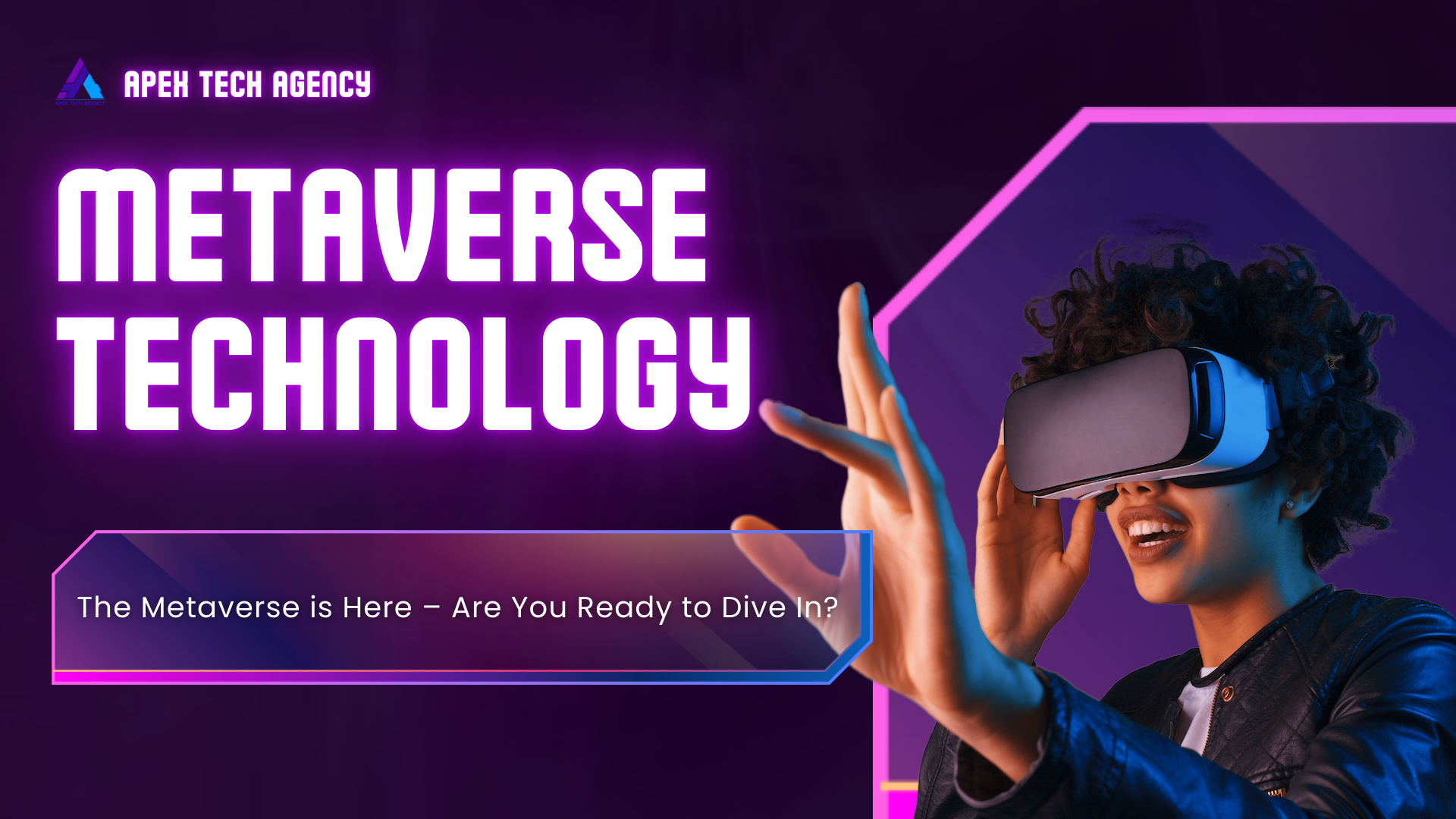
Metaverse Technology is redefining digital interaction by merging immersive virtual environments with real-world connectivity and innovation. The digital world has evolved dramatically over the past two decades. From social media platforms to cloud computing and immersive gaming, innovation continues to reshape how humans interact with technology. Among the most debated advancements in recent years is Metaverse Technology—a concept that once dominated headlines, attracted billions in investment, and sparked global curiosity.
But as market hype cools and practical challenges emerge, many people are asking: Is the metaverse still the future, or was it just a trend fueled by excitement and speculation?
In this comprehensive guide, we will explore the evolution, current state, real-world applications, challenges, and future potential of Metaverse Technology to determine whether it remains a transformative force in the global digital economy.
Understanding the Concept of the Metaverse
The term “metaverse” refers to a shared, immersive, virtual environment where users interact through digital avatars. It combines elements of virtual reality (VR), augmented reality (AR), artificial intelligence, blockchain, and cloud computing to create persistent digital spaces.
Unlike traditional websites or social platforms, the metaverse aims to provide a fully immersive experience where users can:
- Socialize in real-time
- Attend events and conferences
- Purchase digital assets
- Work in collaborative environments
- Explore virtual worlds
The idea gained mainstream momentum when Meta announced a strategic pivot toward building virtual ecosystems. This rebranding signaled long-term corporate commitment to immersive digital experiences.
The Rise of Immersive Virtual Ecosystems
In its early stages, Metaverse Technology was heavily associated with gaming platforms. Virtual worlds like Roblox and Fortnite demonstrated that millions of users were willing to spend hours interacting in digital environments.
However, the vision quickly expanded beyond entertainment.
Virtual Events and Conferences
During global lockdowns, companies experimented with hosting virtual trade shows and conferences in immersive 3D environments. Attendees could navigate digital exhibition halls, engage in networking sessions, and attend keynote speeches through avatars.
Digital Real Estate and NFTs
Blockchain integration enabled the creation of virtual land and digital collectibles. Investors purchased virtual properties in platforms like Decentraland, anticipating future value appreciation.
These developments created excitement, but they also raised questions about long-term sustainability.
Corporate Investment and Enterprise Adoption
Despite fluctuating public interest, enterprise investment in Metaverse Technology remains substantial. Metaverse Technology is redefining digital interaction by merging immersive virtual environments with real-world connectivity and innovation.
Remote Collaboration and Virtual Workspaces
Organizations are experimenting with virtual offices that simulate in-person collaboration. Employees can hold meetings, brainstorm ideas, and present projects within immersive environments.
This approach offers potential benefits:
- Enhanced team engagement
- Reduced travel expenses
- Global workforce integration
- Interactive training simulations
Industrial and Manufacturing Applications
Companies are using digital twins—virtual replicas of physical assets—to simulate operations, test equipment performance, and optimize production processes.
For example, Microsoft integrates mixed reality solutions into enterprise platforms, enabling businesses to visualize data in immersive environments.
Enterprise use cases suggest that Metaverse Technology extends far beyond gaming.
Education and Training in Virtual Worlds
Educational institutions and corporate training departments are leveraging immersive environments to create interactive learning experiences.
Immersive Learning Simulations
Students can explore historical landmarks, conduct virtual science experiments, or practice medical procedures in safe digital spaces.
Skill Development and Workforce Training
Industries such as aviation and healthcare use VR-based simulations to train professionals without real-world risks.
Immersive education enhances engagement, retention, and practical understanding.
Healthcare and Therapeutic Applications
The healthcare industry is also exploring immersive environments for treatment and therapy. Metaverse Technology is redefining digital interaction by merging immersive virtual environments with real-world connectivity and innovation.
Mental Health and Exposure Therapy
Virtual reality experiences help patients confront phobias or PTSD triggers in controlled environments.
Surgical Training and Visualization
Surgeons can rehearse complex procedures using realistic 3D models before operating on actual patients.
Metaverse Technology provides powerful tools for improving patient outcomes and medical training.
Social Interaction and Digital Identity
One of the most ambitious aspects of the metaverse vision is the creation of persistent digital identities.
Users can build avatars, purchase digital fashion, and maintain social connections across virtual spaces.
Luxury brands and entertainment companies are experimenting with digital fashion shows and virtual concerts, creating new revenue streams.
However, social integration also introduces challenges related to moderation, privacy, and digital well-being.
Technological Foundations Powering the Metaverse
The success of immersive ecosystems depends on multiple supporting technologies.
Virtual Reality and Augmented Reality
Advanced headsets provide realistic experiences. Companies like Apple have entered the mixed-reality market, signaling long-term industry interest.
High-Speed Connectivity
5G networks enable real-time rendering and reduce latency, making immersive interactions smoother.
Cloud Computing and Edge Processing
Cloud platforms handle complex computations, while edge devices ensure responsiveness.
The evolution of Metaverse Technology relies heavily on continuous hardware and infrastructure improvements.
Challenges Slowing Widespread Adoption
Despite promising developments, several obstacles remain.
Hardware Limitations
VR headsets can be expensive and uncomfortable for extended use. Mass adoption requires affordable and lightweight devices.
Privacy and Security Concerns
Immersive platforms collect sensitive behavioral and biometric data. Ensuring secure storage and ethical usage is critical.
Regulatory Uncertainty
Governments are still defining legal frameworks for digital property rights, taxation, and virtual governance.
Market Volatility
Initial hype led to inflated valuations and speculative investments. Market corrections created skepticism among investors.
These factors contribute to ongoing debate about the long-term viability of Metaverse Technology.
Is the Hype Over or Just Evolving?
Public excitement may have cooled compared to peak media coverage, but innovation continues behind the scenes.
Technology cycles often follow a pattern: initial hype, disillusionment, and eventual maturation. Many experts argue that immersive ecosystems are currently transitioning from experimental hype to practical implementation.
Instead of focusing solely on virtual social worlds, developers are prioritizing:
- Enterprise solutions
- Industrial applications
- Education and training tools
- Healthcare innovations
This shift toward utility rather than spectacle may define the next phase of development.
The Economic Impact and Market Outlook
Market research firms predict long-term growth in immersive computing industries.
Investment trends indicate that companies are focusing on foundational infrastructure, including:

- AR/VR hardware development
- Cloud rendering technologies
- AI-driven avatar systems
- Blockchain integration for asset ownership
As hardware improves and costs decrease, adoption rates are expected to rise gradually.
Metaverse Technology may not replace the physical world, but it could become a complementary digital layer enhancing productivity and entertainment.
Ethical and Social Considerations
The future of immersive digital ecosystems depends on responsible development.
Digital Well-Being
Excessive screen time and social isolation remain concerns.
Inclusivity and Accessibility
Platforms must accommodate diverse users, including individuals with disabilities.
Data Ownership
Clear policies regarding user-generated content and digital assets are essential.
Addressing these issues will determine public trust and long-term sustainability.
The Role of Artificial Intelligence
Artificial intelligence enhances immersive experiences by powering realistic avatars, language translation, and adaptive environments.
AI-driven moderation tools help manage user interactions and reduce harmful behavior.
Without advanced AI systems, scalable and interactive immersive ecosystems would not be possible.
Final Verdict: Is It Still the Future?
The answer is nuanced.
Metaverse Technology may not immediately revolutionize daily life for every individual, but its underlying innovations are steadily influencing multiple industries.
Rather than viewing it as a single virtual universe, it is more accurate to see it as a collection of interconnected immersive technologies reshaping digital interaction.
The future likely involves gradual integration into:
- Remote collaboration
- Virtual commerce
- Immersive education
- Industrial simulation
Innovation rarely follows a straight line. While public attention fluctuates, foundational development continues.
Conclusion
Metaverse Technology remains a significant force in the evolution of digital ecosystems. Though initial excitement has moderated, enterprise investment, infrastructure development, and real-world applications demonstrate ongoing relevance.
The journey toward fully immersive virtual environments may take longer than initially expected, but the building blocks are steadily being assembled.
In the coming years, immersive computing could become as commonplace as smartphones and cloud services are today. The real question is not whether it will exist, but how deeply it will integrate into our professional and personal lives.
The future may not be entirely virtual—but it is undeniably becoming more immersive.
Want to know about “How 8 Electric Vehicle Technologies transform Gladly.”