

In the modern digital era of 2026, technology has simplified even the oldest mathematical systems, including Roman numerals. While Roman numerals originated thousands of years ago, they are still widely used today in various fields such as education, design, publishing, and even entertainment. However, converting numbers into Roman numerals manually can be confusing due to their unique rules and structure.
This is where a Roman number converter becomes extremely useful. It is a smart online tool designed to instantly convert numbers into Roman numerals and Roman numerals back into standard numeric form. Instead of memorizing complex rules or performing calculations, users can rely on this tool to get accurate results in seconds.
Whether you are a student learning basic number systems, a teacher preparing lesson materials, a designer working on creative projects, or a professional dealing with structured documents, this tool can significantly improve your efficiency. In this detailed guide, we will explore everything about the Roman number converter, including its functionality, features, benefits, real-life applications, and why it remains important even in 2026.
What is a Roman number converter?
A Roman number converter is an online or digital utility that converts numbers between two formats:
- Arabic numerals (standard numbers like 1, 2, 3…)
- Roman numerals (I, V, X, L, C, D, M)
This tool eliminates the need for manual conversion by automatically applying the rules of Roman numerals.
Detailed Functionality
The converter performs two main tasks:
- Decimal to Roman Conversion
It converts a normal number into its Roman numeral equivalent.
Example:
25 → XXV - Roman to Decimal Conversion
It converts Roman numerals into standard numbers.
Example:
XL → 40
The tool is designed to handle both simple and complex numbers, making it suitable for beginners as well as advanced users.
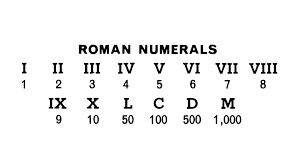
Understanding Roman Numerals in Detail
Roman numerals are based on combinations of letters from the Latin alphabet. Each symbol represents a fixed value.
Basic Roman Symbols Explained
- I = 1
- V = 5
- X = 10
- L = 50
- C = 100
- D = 500
- M = 1000
These symbols are combined in different ways to form numbers.
Formation Rules
Roman numerals follow specific rules:
Addition Rule
When smaller numbers follow larger numbers, they are added.
Example:
VI = 5 + 1 = 6
Subtraction Rule
When a smaller number comes before a larger number, it is subtracted.
Example:
IV = 5 – 1 = 4
Repetition Rule
Symbols like I, X, C, and M can be repeated up to three times.
Example:
III = 3
Understanding these rules manually can be difficult, which is why a Roman number converter is highly useful.
🏛️ Roman Numeral Converter
Convert between Roman numerals and decimal — with full symbol breakdown
Why Roman Number Conversion is Still Important in 2026
Despite being an ancient system, Roman numerals are still relevant today. Their usage continues across different industries and applications.
Education and Learning
Roman numerals are part of school curriculums worldwide. Students need to learn and practice conversions, making the converter a valuable learning tool.
Publishing and Books
Many books use Roman numerals for:
- Chapter numbers
- Preface pages
- Volume indicators
Clocks and Watches
Traditional clocks often display Roman numerals instead of standard numbers.
Movies and Events
Roman numerals are used in:
- Movie sequels (e.g., Part II, III)
- Olympic Games
- Super Bowl events
Design and Aesthetics
Designers use Roman numerals for:
- Logos
- Tattoos
- Branding elements
Key Features of a Modern Roman Number Converter
A high-quality roman number converter in 2026 offers advanced features that make it powerful and efficient.
Instant Conversion
The tool provides results immediately after entering a number. This saves time and improves user experience.
Dual Conversion Capability
Users can convert:
- Numbers to Roman numerals
- Roman numerals to numbers
This flexibility makes the tool highly practical.
High Accuracy
The converter strictly follows Roman numeral rules, ensuring 100% accurate results.
User-Friendly Design
The interface is simple and easy to understand, making it accessible for all users.
Mobile Compatibility
The tool works seamlessly on:
- Smartphones
- Tablets
- Desktop devices
No Installation Required
Users can access the tool online without downloading any software.
How the Roman Number Converter Works
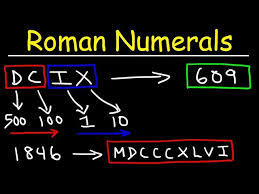
The converter uses predefined algorithms based on Roman numeral rules.
Step-by-Step Logic
- The tool breaks the number into parts (thousands, hundreds, tens, ones).
- Each part is converted into its Roman equivalent.
- All parts are combined to form the final result.
Example
Number: 1987
- 1000 = M
- 900 = CM
- 80 = LXXX
- 7 = VII
Result: MCMLXXXVII
This complex calculation is done instantly by the converter.
Step-by-Step Guide to Using the Roman Number Converter
Using the tool is extremely simple.
Step 1: Enter the Number
Input the number you want to convert.
Step 2: Choose Conversion Type
Select:
- Number to Roman
- Roman to Number
Step 3: Click Convert
The tool processes the input instantly.
Step 4: View Results
The converted value appears on the screen.
Benefits of Using a Roman Number Converter
Saves Time
Manual conversions take time, especially for large numbers. The tool provides instant results.
Eliminates Errors
Human calculations can lead to mistakes. The tool ensures accurate output.
Improves Learning
Students can use the tool to understand how conversions work.
Enhances Productivity
Professionals can complete tasks faster without manual calculations.
Easy Accessibility
The tool is available online and can be used anytime.
Real-Life Use Cases
Students
Students use the converter for homework, exams, and practice exercises.
Teachers
Teachers use it to prepare examples and teaching materials.
Designers
Designers incorporate Roman numerals into creative projects.
Writers and Editors
Used for formatting books and documents.
Common Roman Numeral Conversions
Basic Numbers
- 1 = I
- 2 = II
- 3 = III
- 4 = IV
- 5 = V
Intermediate Numbers
- 10 = X
- 20 = XX
- 50 = L
- 100 = C
Advanced Numbers
- 500 = D
- 1000 = M
- 2026 = MMXXVI
Advantages Over Manual Conversion
Manual conversion requires memorization and practice, while the tool simplifies everything.
Manual Method Issues
- Complex rules
- Time-consuming
- Error-prone
Tool Advantages
- Instant results
- High accuracy
- Easy to use
Why Roman Number Tools Are Trending in 2026
The popularity of online tools has increased due to technological advancements.
Digital Education
Students rely on online tools for quick solutions.
Content Creation
Designers use Roman numerals for creative purposes.
Mobile Usage
People prefer tools that work on mobile devices.
SEO Benefits of Adding Roman Number Converter to Your Website
Adding this tool can boost your website performance.
Increased Traffic
Many users search for Roman numeral tools.
Higher Engagement
Users interact with tools for longer periods.
Better Rankings
Search engines prioritize useful tools.
Tips for Accurate Conversion
- Always enter correct values
- Avoid invalid Roman combinations
- Use trusted tools
Frequently Asked Questions
What is a roman number converter?
It is a tool that converts numbers into Roman numerals and vice versa.
Is it accurate?
Yes, it follows correct Roman numeral rules.
Who can use it?
Students, teachers, designers, and professionals.
Conclusion
Even in 2026, Roman numerals remain an important part of education, design, and culture. A Roman number converter simplifies the process of converting numbers, making it accessible to everyone.
With instant results, high accuracy, and a user-friendly design, this tool is essential for anyone dealing with Roman numerals. Whether you are learning, teaching, or working professionally, the converter helps you save time and avoid errors.
As digital tools continue to evolve, the Roman number converter stands out as a perfect example of how technology can simplify even the oldest mathematical systems.
Want to know about the “#1 Powerful PDF to Text Extractor Tool“?