
In a world where digital transformation is no longer optional, AI Automation Tools have emerged as indispensable assets for businesses of all sizes. From small startups to global enterprises, companies are racing to adopt intelligent technologies that streamline operations, enhance customer experiences, and fuel growth.
But which AI tools actually deliver value? How do you choose and implement them effectively? This definitive guide dives deep into the most impactful AI Automation Tools, real-world use cases, benefits, implementation strategies, and future trends — all geared toward helping your business thrive.
What Are AI Automation Tools?
At their core, AI Automation Tools are software systems that use artificial intelligence (AI), machine learning (ML), natural language processing (NLP), and automation technologies to carry out tasks with minimal human involvement.
Unlike traditional automation — which follows fixed rules — AI-driven automation can learn from data, adapt to changing conditions, and make decisions on its own. This capability enables businesses to automate not just repetitive tasks, but complex workflows that previously required human judgment.vc
Key Capabilities of AI Automation Tools
- Machine Learning: Predicts trends and outcomes based on historical data.
- Natural Language Processing: Understands and responds to human language.
- Intelligent Decision-Making: Selects optimal actions using data insights.
- Task Automation: Executes workflows without manual intervention.
With such capabilities, AI automation becomes a force multiplier — helping businesses improve performance across marketing, sales, customer support, operations, HR, and finance.
Why Your Business Needs AI Automation Tools
If your company still relies heavily on manual processes, you’re probably encountering big challenges:
- Human errors that slow growth
- High labor costs
- Inconsistent customer experiences
- Delayed decision-making
- Inefficient workflows
AI Automation Tools offer solutions to these pain points by:
🚀 Boosting Productivity
Automation handles time-consuming tasks, freeing employees to focus on higher-impact work.
📊 Enhancing Accuracy
AI systems minimize errors in data entry, forecasting, and repetitive workflows.
💡 Improving Decision-Making
Machine learning analyzes large datasets faster than humans, providing actionable insights.
🤝 Elevating Customer Experience
Chatbots, personalized recommendations, and automated support improve satisfaction.
💼 Reducing Costs
Automation trims operational expenses and accelerates processes across departments.
Across industries — from retail to manufacturing, healthcare to finance — businesses are increasingly adopting AI to stay competitive. Let’s explore the top AI automation tools every business should try.
Top AI Automation Tools Every Business Should Try
Below is a curated list of the most impactful AI automation tools, grouped by business function:
1. AI Customer Support Tools
Supporting customers quickly and efficiently is key to retention and satisfaction. AI tools in this category use NLP and machine learning to handle support queries in real time.
🔹 Chatbots & Conversational AI
These tools automate conversations using text or voice and can resolve frequent questions without human intervention.
Benefits of AI Customer Support Tools
- 24/7 customer assistance
- Rapid responses
- Reduced support tickets
- Natural language understanding
Examples:
- AI-powered chatbots that integrate with websites and messaging apps
- Virtual assistants that schedule meetings and answer FAQs
- Automated sentiment analysis systems
Customer support automation reduces workload and ensures consistent communication quality — improving brand reliability.
2. Marketing Automation Platforms
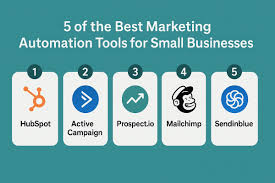
Marketing teams benefit tremendously from AI, especially when it comes to delivering personalized experiences at scale.
🚀 Key Features
- Automated email marketing
- Lead nurturing workflows
- Predictive customer insights
- Campaign optimization
- Customer segmentation
AI Marketing Automation Tools help teams:
- Target the right audience
- Improve conversion rates
- Deliver personalized content
These systems harvest vast data points — from user behaviors, demographics, engagement, and transactions — to optimize campaigns and maximize ROI.
3. Robotic Process Automation (RPA) with AI Capabilities
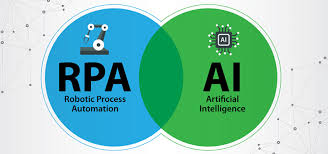
RPA is about automating repetitive, rule-based tasks — but when combined with AI, it gains the ability to handle unstructured data and make decisions.
🔹 What AI-Infused RPA Can Do
- Read and classify invoices
- Extract key information from documents
- Validate data against external sources
- Trigger workflow actions based on predictive insights
Examples of AI-driven RPA Applications
- Automating accounts payable and receivable
- HR onboarding and payroll processing
- Compliance report generation
RPA tools augmented with AI capabilities become true intelligent process automation platforms.
4. AI Automation Tools for Sales & CRM
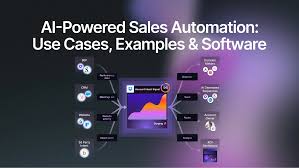
Sales teams live or die by data — and AI can extract insights and automate repetitive sales tasks.
🧠 Common AI-Powered Sales Automation Features
- Lead scoring and prioritization
- Sales forecasting
- Automated follow-ups and reminders
- Customer behavior predictions
AI in CRM platforms ensures sales teams:
- Focus on the most valuable prospects
- Reduce administrative work
- Increase deal closures
These tools are game-changers for performance-driven sales environments.
5. AI Analytics & Decision Support Platforms
Making data-driven decisions demands tools that can go beyond dashboards and provide insights, patterns, and predictions.
📊 Features of AI Analytics Tools
- Predictive analytics
- Anomaly detection
- Trend forecasting
- Real-time insights
These systems analyze massive datasets quickly — helping businesses anticipate changes in customer behavior, optimize pricing strategies, and refine product offerings.
6. Workflow Automation Platforms
Integrating tools across departments without custom coding is possible using modern workflow automation platforms enhanced with AI.
🛠️ Benefits
- Centralized process management
- Data synchronization across systems
- Event-based automation
- Actionable alerts and notifications
Businesses use these tools to connect apps — from CRM to finance — and implement seamless process automation.
7. Content Creation and AI Writing Tools

Content is still king, but producing high-quality content consistently is challenging. AI writing tools help teams generate:
- SEO-optimized articles
- Product descriptions
- Social media content
- Marketing collateral
These tools use advanced models to:
- Understand context
- Match tone and style
- Optimize for keywords and readability
Readable, SEO-rich content fuels organic traffic and keeps audiences engaged.
8. AI Automation Tools for HR & Talent Management
Recruiting, onboarding, and employee administration can be tedious. AI simplifies HR workflows by automating:
🔹 Core HR Tasks
- Resume screening
- Candidate matching and ranking
- Employee onboarding workflows
- Performance insights
AI tools help HR teams hire the right talent faster and retain employees through personalized growth plans.
9. Intelligent Document Processing Tools
Handling forms, contracts, invoices, and unstructured documents manually is slow. Intelligent Document Processing (IDP) uses AI to:
- Extract text using OCR
- Validate data accuracy
- Classify documents
- Populate systems automatically
IDP tools are especially valuable in finance, legal, procurement, and compliance.
10. AI-Driven Cybersecurity Tools

Automation isn’t just about efficiency — it’s also about protection. AI cybersecurity tools help protect systems by:
- Detecting anomalies in real time
- Blocking suspicious activities
- Predicting threats using pattern recognition
- Automating incident responses
These AI tools strengthen security postures, reduce risk, and respond faster than human teams alone.
How to Choose the Right AI Automation Tools
Choosing the right automation tools isn’t one-size-fits-all. Here’s a method to ensure you make a smart decision.
1. Understand Your Business Needs
Before evaluating tools, identify:
- Tasks that consume the most time
- Areas with frequent errors
- Processes that impact customer satisfaction
Ask:
✔ What are our top inefficiencies?
✔ Which processes generate the most bottlenecks?
Your answers guide investments in automation.
2. Prioritize Integration & Compatibility
Your AI tools must work with existing systems like CRM, ERP, marketing stacks, and databases.
Integration benefits:
- Unified workflows
- Consistent data
- Better team collaboration
3. Evaluate Scalability & Flexibility
Choose tools that grow with your business. Scalable AI Automation Tools adapt to increasing data volumes and workflows without performance degradation.
4. Assess Security & Compliance
AI systems must meet regulatory requirements — especially in:
- GDPR regions
- Healthcare
- Finance
Ensure tools have:
✔ Data encryption
✔ Audit trails
✔ Role-based access
5. Consider Cost-to-Value Ratio
AI automation tools may carry upfront costs, but the goal is value — not expense. Evaluate:
- Time saved
- Labor reductions
- Error reductions
- Revenue impact
ROI should justify investment.
Best Practices for Implementing AI Automation Tools
Successfully implementing AI requires thoughtful planning:
1. Start with Small Pilot Projects
Test tools in controlled environments before full deployment:
- Validate outcomes
- Gather team feedback
- Identify bottlenecks
2. Train Your Workforce
Automation doesn’t replace people; it augments them. Invest in training so your teams:
- Use tools effectively
- Understand AI outputs
- Trust automated decisions
3. Monitor and Optimize Continuously
AI projects aren’t “set and forget.” Monitor KPIs like:
- Cycle time reduction
- Error rate change
- Customer satisfaction
Use insights to refine automation strategies.
4. Foster Cross-Functional Collaboration
Automation touches marketing, operations, IT, sales, and finance. Cross-team alignment ensures:
✔ Seamless adoption
✔ Shared dashboards
✔ Unified goals
5. Stay Updated on AI Trends
AI ecosystems evolve rapidly. Periodically reassess new automation capabilities to maximize competitive advantage.
Real-World Use Cases of AI Automation Tools
To bring the benefits into context, here are examples of how industries use AI automation:
Retail & E-Commerce
AI tools automate:
- Personalized recommendations
- Inventory forecasts
- Dynamic pricing
- Customer support
Example: A clothing brand uses predictive analytics to forecast demand and chatbots to handle customer queries — increasing sales and reducing cart abandonment.
Healthcare
Automation supports:
- Patient scheduling
- Claims processing
- Diagnosis support
- Patient engagement
Example: AI document processing accelerates medical billing, while predictive tools flag high-risk conditions early.
Finance & Banking
AI systems automate:
- Fraud detection
- Loan processing
- Compliance reporting
- Customer onboarding
Example: AI models detect suspicious transactions and trigger automated alerts — reducing risk and improving security.
Manufacturing
AI automation improves:
- Quality control
- Predictive maintenance
- Supply chain coordination
- Production planning
Example: Sensors equipped with ML detect defects in real time, triggering auto-adjustments — reducing downtime.
Challenges in AI Automation & How to Overcome Them
Even the best automation strategies face obstacles:
1. Data Quality & Governance
If data is messy, AI fails to deliver accurate insights.
Solution: Implement strong data governance and cleanup processes.
2. Workforce Resistance
People may fear job loss.
Solution: Communicate clearly how automation augments roles and increases productivity.
3. Integration Complexity
Old systems struggle to connect with new AI tools.
Solution: Use middleware or platforms with robust APIs.
4. Security Risks
Automation increases data access points.
Solution: Adopt strong encryption, access controls, and audit logging.
Future Trends in AI Automation Tools
The road ahead is even more exciting. Expect:
🔹 Hyper-automation
End-to-end automation of complex business processes across systems.
🔹 Autonomous Workflows
AI that dynamically adjusts processes based on real-time data.
🔹 Multimodal AI
Systems that combine text, voice, images, and video in automation.
🔹 Self-Learning Systems
AI that improves performance without human retraining.
These trends point toward a new era where automation and intelligence become inseparable.
Conclusion
AI Automation Tools are reshaping the way businesses operate. From enhancing customer experiences to streamlining workflows, these technologies offer unmatched value — when chosen and implemented strategically.
By understanding your business needs, selecting tools based on ROI, and following best practices, you can harness AI automation to drive growth, efficiency, and innovation.
Whether you’re just starting with automation or scaling advanced AI initiatives, now is the time to act. The future belongs to organizations that automate intelligently.
Want to Know about “5 Enterprise Security Protocols Driving Better IT Risk Management“