In 2026, several Digital Technology Trends are reshaping industries, redefining how organizations operate, and changing everyday life. From artificial intelligence and quantum computing to immersive realities and next-generation networks, these technologies are driving a new era of digital innovation.
Digital transformation is accelerating faster than ever before. Businesses, governments, and individuals are increasingly relying on advanced technologies to improve productivity, connectivity, and innovation.
Understanding these Digital Technology Trends is essential for companies that want to remain competitive and for individuals seeking to stay relevant in a rapidly evolving digital economy. Emerging technologies are not only improving efficiency but also creating entirely new markets and opportunities. Industries such as healthcare, finance, education, manufacturing, and entertainment are all being transformed through advanced digital solutions.
This article explores the top Digital Technology Trends transforming the world in 2026, providing detailed explanations of each trend and its impact on businesses, society, and the global economy.
1. Artificial Intelligence and AI Agents Revolutionizing Work
Artificial Intelligence (AI) continues to dominate the list of Digital Technology Trends in 2026. AI systems are becoming more powerful, autonomous, and capable of performing complex tasks that once required human intelligence. Organizations across industries are using AI to automate operations, analyze data, and enhance decision-making processes.

One of the most important developments in 2026 is the rise of AI agents, which act like digital employees capable of executing multi-step tasks. These agents can handle customer support, marketing automation, data analysis, and even software debugging without constant human supervision. Businesses are increasingly deploying AI agents to streamline workflows and reduce operational costs.
Another major advancement is the integration of AI copilots into enterprise applications. These AI assistants help professionals write code, generate reports, plan projects, and automate repetitive tasks. By embedding AI directly into workplace tools, companies are significantly improving productivity and reducing manual workload.
Generative AI is also evolving rapidly. Instead of only producing text or images, it is now capable of generating videos, software code, product designs, and business insights. Multimodal AI models can understand and process multiple types of data simultaneously, including text, audio, images, and video.
The impact of AI is widespread:
- Automating customer service with intelligent chatbots
- Enhancing healthcare diagnostics using AI-driven analysis
- Improving financial forecasting and risk assessment
- Personalizing digital marketing campaigns
AI is expected to become the foundation of many future digital systems, making it one of the most influential Digital Technology Trends of 2026.
2. Quantum Computing Entering Practical Applications
Quantum computing is another breakthrough among the most significant Digital Technology Trends shaping the future. Unlike traditional computers that process data using binary bits (0s and 1s), quantum computers use quantum bits or qubits, which can exist in multiple states simultaneously. This allows them to perform extremely complex calculations much faster than classical computers.
In 2026, quantum computing is moving from experimental research to practical enterprise applications. Hybrid systems that combine classical computing with quantum processing are becoming more common, enabling organizations to solve complex problems more efficiently.
Industries that benefit from quantum computing include:
- Pharmaceutical research: Accelerating drug discovery and molecular simulations
- Financial modeling: Performing advanced risk calculations and portfolio optimization
- Climate modeling: Analyzing environmental changes with higher accuracy
- Cybersecurity: Developing quantum-resistant encryption methods
Quantum computing also presents new challenges. As quantum systems become more powerful, they may be capable of breaking current encryption standards. This has led to a growing focus on digital technology trends, where organizations prepare for a future where traditional encryption methods may no longer be secure.
Although full-scale quantum computers are still developing, 2026 marks an important transition toward practical quantum solutions.
3. Edge Computing and Edge AI
Another critical shift in Digital Technology Trends is the rise of edge computing and edge AI. Traditionally, most data processing occurred in centralized cloud servers. However, as the number of connected devices increases, processing data closer to where it is generated has become essential.
Edge computing enables devices such as smartphones, sensors, and industrial machines to process data locally rather than sending it to distant data centers. This approach reduces latency, improves efficiency, and enhances data privacy.
In 2026, edge AI is becoming increasingly common. Devices now have powerful chips capable of running AI algorithms directly on the device itself. This allows applications such as:
- Real-time facial recognition
- Smart surveillance systems
- Autonomous vehicles
- Intelligent industrial automation
Edge AI also supports offline capabilities, meaning devices can continue functioning even without internet connectivity. This is particularly useful for remote environments, healthcare monitoring devices, and industrial IoT systems.
By combining artificial intelligence with distributed computing, edge computing is becoming a major driver of innovation across multiple industries.
4. The Expansion of 6G and Next-Generation Connectivity

Connectivity technology is evolving rapidly, and one of the most promising Digital Technology Trends is the development of 6G networks. While 5G networks are still expanding globally, research and early development of 6G technology are already underway.
6G is expected to deliver extremely high data speeds, ultra-low latency, and enhanced reliability. Early predictions suggest that 6G networks could be up to 100 times faster than 5G.
Key capabilities of 6G include:
- Real-time holographic communication
- Advanced smart city infrastructure
- Massive Internet of Things (IoT) connectivity
- Autonomous transportation systems
6G will also play a crucial role in enabling emerging technologies such as the metaverse, digital twins, and immersive virtual environments. Faster networks will allow billions of devices to communicate seamlessly, creating a more connected digital ecosystem.
The transition toward next-generation connectivity will significantly influence global digital infrastructure over the coming decade.
5. Extended Reality (XR) and Immersive Digital Experiences
Extended Reality (XR), which includes Virtual Reality (VR) and Augmented Reality (AR), is becoming one of the most exciting Digital Technology Trends in 2026. These technologies blend the physical and digital worlds, creating immersive experiences for users.
Advancements in hardware and software have made XR devices smaller, faster, and more accessible. Businesses are now using immersive technologies for a variety of purposes, including training, collaboration, and entertainment.
Examples of XR applications include:
- Virtual training environments for healthcare and aviation
- AR-based maintenance support for industrial workers
- Immersive gaming and digital entertainment
- Virtual meetings and remote collaboration
XR technology is also closely linked to the development of the metaverse, a virtual universe where people can interact, work, and socialize in digital spaces.
As hardware becomes more affordable and network speeds improve, immersive technologies are expected to become a mainstream part of digital life.
6. Blockchain and Web3 Infrastructure
Blockchain technology continues to evolve and remains one of the most influential Digital Technology Trends. While it first gained popularity through cryptocurrencies, blockchain is now being used in many industries beyond finance.
The next phase of blockchain development is often referred to as Blockchain 3.0, which focuses on real-world applications rather than digital currencies. One major innovation is tokenization, where real-world assets such as real estate, carbon credits, and financial securities are represented digitally on blockchain networks. This digital technology trends are brighten the future of humans.
Blockchain provides several advantages:
- Improved transparency and trust
- Secure digital transactions
- Decentralized data storage
- Enhanced supply chain tracking
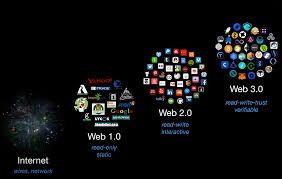
Web3 platforms built on blockchain technology are also gaining traction. These decentralized platforms allow users to control their own data and digital identities without relying on centralized companies.
As blockchain infrastructure matures, it is likely to become an integral part of the digital economy.
7. Cybersecurity and Zero-Trust Architecture
As digital technologies become more advanced, cybersecurity has become a top priority. Organizations must protect their data, networks, and digital assets from increasingly sophisticated cyber threats.
One of the most important cybersecurity Digital Technology Trends is the adoption of Zero-Trust Architecture. This approach assumes that no user or device should be trusted automatically, even if they are inside the network.
Instead, every access request must be verified continuously. This method significantly reduces the risk of cyberattacks and data breaches.
Key components of modern cybersecurity strategies include:
- Multi-factor authentication (MFA)
- Identity and access management
- AI-driven threat detection
- Continuous network monitoring
With the growing use of cloud computing, IoT devices, and remote work environments, cybersecurity will remain a critical area of investment for organizations worldwide.
8. Digital Twins and Smart Infrastructure
Digital twin technology is emerging as one of the most transformative Digital Technology Trends. A digital twin is a virtual representation of a physical object, system, or process.
Using real-time data from sensors and connected devices, digital twins allow organizations to simulate and analyze the behavior of physical systems in a digital environment.
Industries using digital twins include:
- Manufacturing and industrial automation
- Smart city planning
- Healthcare and medical devices
- Energy and environmental management
For example, a digital twin of a factory can simulate production processes to identify inefficiencies and predict equipment failures before they occur.
When combined with AI, IoT, and advanced analytics, digital twins enable predictive maintenance, improved operational efficiency, and smarter decision-making.
9. Intelligent Automation and Smart Enterprises
Automation has been transforming industries for years, but in 2026 it is becoming more intelligent and sophisticated. Intelligent automation combines AI, robotics, and machine learning to automate complex business processes.
These digital technology trends are reshaping how organizations operate. Instead of relying on manual processes, companies are using digital systems that can analyze data, make decisions, and execute tasks automatically.
Examples of intelligent automation include:
- Robotic process automation (RPA) for repetitive administrative tasks
- AI-driven customer support systems
- Automated supply chain management
- Smart manufacturing using robotics and IoT
These technologies are helping businesses reduce costs, improve productivity, and deliver better customer experiences.
10. Sustainable and Green Technology

Sustainability is becoming an important consideration in modern Digital Technology Trends. As data centers, AI systems, and digital infrastructure expand, energy consumption is also increasing.
Technology companies are now investing heavily in green computing solutions that reduce environmental impact while maintaining high performance.
Some of the key initiatives include:
- Energy-efficient data centers
- Renewable energy for cloud infrastructure
- AI-optimized power management systems
- Sustainable hardware manufacturing
Many large technology companies are committing to carbon-neutral operations and environmentally responsible digital infrastructure.
Sustainable technology not only helps protect the environment but also reduces operational costs and improves corporate responsibility.
Conclusion
The rapid advancement of technology is transforming the world at an unprecedented pace. The Digital Technology Trends of 2026 demonstrate how innovation is reshaping industries, economies, and everyday life.
Technologies such as artificial intelligence, quantum computing, edge computing, immersive reality, blockchain, and next-generation connectivity are creating new opportunities for businesses and individuals alike. These innovations are not only improving efficiency but also enabling entirely new ways of working, communicating, and interacting with digital systems.
Organizations that understand and adopt these Digital Technology Trends will gain a significant competitive advantage in the digital economy. Meanwhile, professionals who develop skills related to these technologies will be better prepared for the future workforce.
As digital transformation continues to accelerate, staying informed about emerging technologies will be essential. The world of 2026 is only the beginning of a new technological era that will redefine how society functions in the years to come.
Want to know about the “AI Automation 2.0: The Future of smart Business“?